 Australia
 Canada
 Cayman Islands
 Dominican Republic
 Hong Kong
 Indonesia
 Ireland
 Jamaica
 New Zealand
 Singapore
 Thailand
 United Kingdom
 United States
 Vietnam

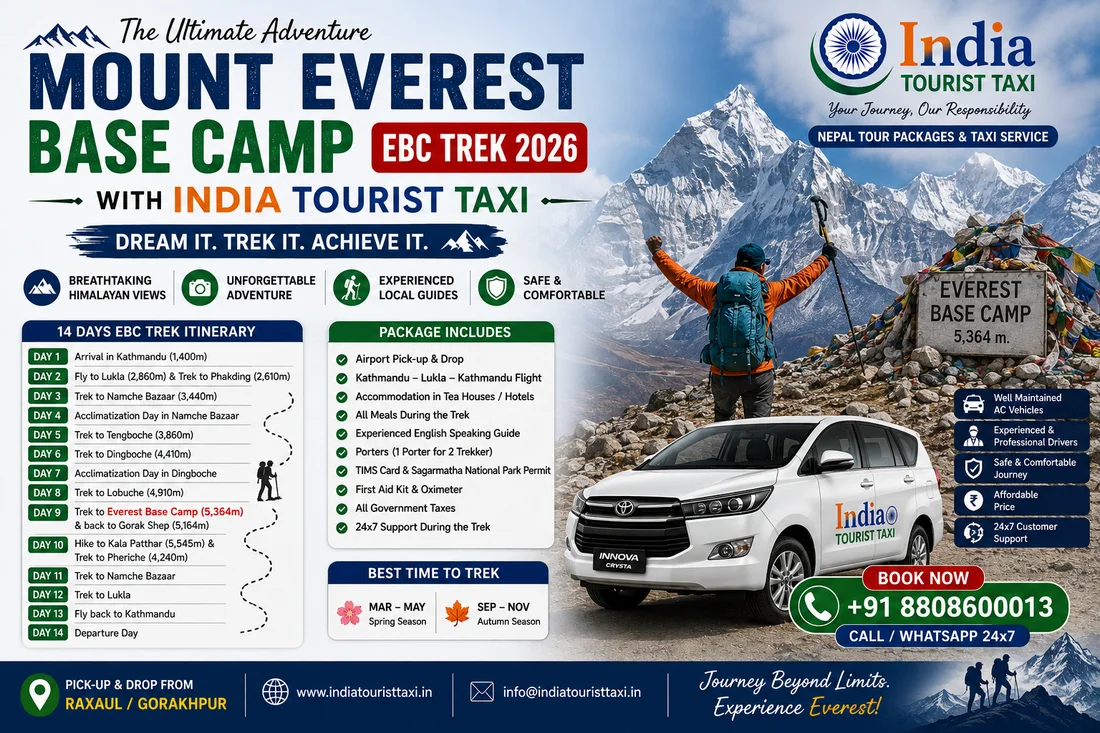
Mount Everest Base Camp with India Tourist Taxi is an exciting Nepal adventure for travelers who want to experience the Himalayas, Sherpa culture, Buddhist monasteries and breathtaking views of Mount Everest.
The classic Everest Base Camp trek begins at Lukla and passes through famous Himalayan destinations including Phakding, Namche Bazaar, Tengboche, Dingboche, Lobuche and Gorak Shep before reaching Everest Base Camp. Nepal Tourism Board describes the classic journey as roughly a two-week trek from Lukla, with acclimatization an essential part of the route.
India Tourist Taxi can assist Indian travelers with transportation, Kathmandu arrangements and customized Nepal travel planning before and after their Everest adventure.
🏔️ Why Choose the Everest Base Camp Trek?Mount Everest, known as Sagarmatha in Nepal, stands at approximately 8,848 metres. Everest Base Camp itself is around 5,380 metres above sea level.
The trek offers much more than a view of Everest. Along the way, travelers experience:
🏔️ Mount Everest and surrounding Himalayan peaks🏘️ Traditional Sherpa villages🛕 Tengboche Monastery🌉 Himalayan suspension bridges🧊 Khumbu Glacier🌲 Sagarmatha National Park📸 Kala Patthar viewpoints🏕️ Mountain tea houses🙏 Buddhist culture and prayer flagsThe Everest region is also home to Lhotse, Cho Oyu and numerous peaks above 6,000 metres.
🗺️ Everest Base Camp RouteA classic itinerary follows:
Kathmandu → Lukla → Phakding → Namche Bazaar → Tengboche → Dingboche/Pheriche → Lobuche → Gorak Shep → Everest Base Camp → Kala Patthar → Lukla → Kathmandu
Lukla is traditionally the gateway to the Everest region. From there, the trail follows the Dudh Koshi valley toward Namche Bazaar before continuing into the higher Khumbu region.
📅 Suggested 14-Day Everest Base Camp ItineraryDay 1 – Arrive in KathmanduArrive in Kathmandu and transfer to your hotel.
Use the day for rest, trek preparation and checking your equipment.
Overnight: Kathmandu
Day 2 – Kathmandu to Lukla → PhakdingFly from Kathmandu toward Lukla, subject to flight and weather conditions.
Begin the trek toward Phakding through the Dudh Koshi valley.
Overnight: Phakding
Day 3 – Phakding → Namche BazaarContinue through the valley and cross suspension bridges before climbing toward Namche Bazaar.
Namche is an important Sherpa trading and acclimatization centre at approximately 3,500 metres.
Overnight: Namche Bazaar
Day 4 – Acclimatization at NamcheSpend the day acclimatizing.
A short hike around Namche, Khumjung or nearby viewpoints can provide excellent mountain views without moving to a higher overnight elevation.
Nepal Tourism Board emphasizes that acclimatization should not be rushed.
Overnight: Namche Bazaar
Day 5 – Namche → TengbocheTrek toward Tengboche.
The route offers views of Thamserku, Kangtega, Ama Dablam, Lhotse and Everest.
Visit Tengboche Monastery, an important Buddhist centre in the Khumbu region.
Overnight: Tengboche
Day 6 – Tengboche → DingbocheContinue through the alpine landscape toward Dingboche.
As the altitude increases, the terrain becomes more rugged and vegetation becomes increasingly sparse.
Overnight: Dingboche
Day 7 – Dingboche AcclimatizationTake another acclimatization day.
A short local hike can be arranged depending on your fitness, weather and guide's recommendations.
Overnight: Dingboche
Day 8 – Dingboche → LobucheContinue toward Lobuche along the high-altitude Khumbu landscape.
The trail eventually reaches the area around the Khumbu Glacier.
Overnight: Lobuche
Day 9 – Lobuche → Gorak Shep → Everest Base CampThis is one of the major highlights of the trek.
Continue toward Gorak Shep and then make the journey to Everest Base Camp.
The trail near the glacier requires careful walking, and conditions can be challenging.
Overnight: Gorak Shep
Day 10 – Kala Patthar Sunrise → DescendStart early for Kala Patthar, one of the region's best-known viewpoints.
Kala Patthar reaches approximately 5,545 metres and provides extensive views toward Mount Everest.
After the viewpoint visit, descend toward a lower settlement.
Day 11 – Trek BackContinue descending through the Khumbu villages.
Overnight: Lower Khumbu
Day 12 – Trek to LuklaContinue toward Lukla and complete the main trekking section.
Overnight: Lukla
Day 13 – Lukla → KathmanduFly back to Kathmandu, subject to operational and weather conditions.
Overnight: Kathmandu
Day 14 – Kathmandu DepartureBreakfast and departure according to your travel schedule.
📸 Best Photography Spots1. Namche BazaarCapture traditional Sherpa architecture against dramatic mountain scenery.
2. Tengboche MonasteryTengboche offers a remarkable combination of Buddhist architecture and Himalayan scenery, particularly around Ama Dablam, Everest and Lhotse.
3. Ama Dablam ViewpointsAma Dablam is one of the most recognizable mountains along the route and makes a spectacular photographic subject.
4. Everest Base CampPhotograph the Khumbu Glacier surroundings, expedition area, prayer flags and trekking landscape.
5. Kala PattharFor broad Himalayan panoramas, Kala Patthar is one of the major viewpoints on the classic route.
🎒 Everest Base Camp Packing ListBefore beginning your trek, consider carrying:
🥾 Trekking boots🧥 Down jacket🧤 Thermal gloves🧢 Warm hat🕶️ Sunglasses🧦 Trekking and thermal socks🎒 Backpack💧 Reusable water bottle🧴 Sunscreen🔦 Headlamp🔋 Power bank📷 Camera and spare batteries🩹 Personal first-aid supplies🥾 Trekking poles🧥 Waterproof jacket🧼 Personal hygiene itemsYour trekking operator can provide a more detailed equipment list based on the season and itinerary.
🏔️ Altitude & AcclimatizationAltitude is one of the most important considerations on the Everest Base Camp trek.
The route climbs from Lukla at around 2,850 metres to Everest Base Camp at approximately 5,380 metres, while Kala Patthar is around 5,545 metres.
Important tips:Ascend gradually.Take scheduled acclimatization days.Stay hydrated.Follow your guide's instructions.Do not ignore symptoms of altitude sickness.Avoid rushing higher if you are feeling unwell.Descend and seek medical assistance if serious symptoms develop.Nepal Tourism Board specifically advises trekkers to learn about Acute Mountain Sickness (AMS) and take precautions at high altitude.
🛂 TIMS & Trekking RequirementsCurrent Nepal Tourism Board guidance lists Everest Base Camp Trek among the routes where trekkers must be accompanied by a licensed trekking guide and carry an agency-issued TIMS Card under the revised TIMS provisions.
Because trekking rules and fees can change, travelers should verify the current requirements before departure.
For Indian/SAARC travelers, the current NTB TIMS page lists a NPR 1,000 charge for SAARC applicants.
📅 Best Time for Everest Base CampNepal Tourism Board identifies October–November and March–May among the key periods for the Everest region, while its regional information also discusses winter travel.
The best dates for your trip should also take into account:
WeatherFlight conditionsTrail conditionsAccommodation availabilityPersonal fitnessAltitude acclimatization💰 Everest Base Camp Trek Package CostThe total cost depends on your travel dates, group size, accommodation, guide, porter, flights, permits and services selected.
Indicative budgetPackage TypeApprox. Starting BudgetGroup/standard trek₹90,000+ per personPrivate/comfort trek₹1,20,000+ per personNote: These are planning estimates rather than fixed current package prices. A final quotation should be prepared according to your exact dates, group size and inclusions.
🇮🇳 Everest Base Camp from India with India Tourist TaxiTravelers from India can begin their Nepal journey with India Tourist Taxi for transportation and travel arrangements before and after the trek.
Our travel assistance can include:🚕 India–Nepal transportation
🏨 Kathmandu hotel arrangements
🚐 Airport and local transfers
🗺️ Customized Nepal itineraries
🏔️ Everest Base Camp trip coordination
👨👩👧 Private family/group travel planning
📞 Travel assistance and booking support
The high-altitude trek itself should be organized through an appropriately registered/licensed trekking agency in accordance with Nepal's current regulations.
⭐ Why Plan Your Nepal Journey with India Tourist Taxi?India Tourist Taxi specializes in Nepal travel arrangements for travelers from India, including customized road journeys, Nepal sightseeing tours and transportation services.
You can combine your Everest adventure with additional Nepal destinations before or after the trek, depending on your schedule.
Popular combinationsKathmandu + Everest Base CampKathmandu + Pokhara + Everest Base CampGorakhpur → Kathmandu → Everest Base CampRaxaul → Kathmandu → Everest Base CampNepal sightseeing + Everest Base Camp❓ Frequently Asked QuestionsHow high is Everest Base Camp?Everest Base Camp is approximately 5,380 metres (17,600 feet) above sea level.
How long is the Everest Base Camp trek?The classic trek from Lukla is generally planned as approximately two weeks, although the exact duration depends on acclimatization and itinerary.
Is a guide required for Everest Base Camp?Yes. Current Nepal Tourism Board guidance lists Everest Base Camp among the routes requiring a licensed trekking guide and agency-issued TIMS Card.
What is the best viewpoint for Mount Everest?Kala Patthar, at approximately 5,545 metres, is a well-known viewpoint offering extensive views toward Mount Everest.
Can I reach Everest Base Camp by taxi?No. Everest Base Camp is a trekking destination. Vehicles can take travelers to relevant road-accessible points, but the classic EBC route is completed on foot from the Lukla area.
Can Indian travelers book the trip with India Tourist Taxi?India Tourist Taxi can assist with transportation and Nepal travel arrangements. The high-altitude trekking component should be arranged according to Nepal's current trekking regulations and through the appropriate registered trekking operator.
🏔️ Mount Everest Base Camp with India Tourist TaxiA journey to Mount Everest Base Camp combines Himalayan scenery, Sherpa culture, Buddhist heritage and a challenging high-altitude trekking experience.
From Kathmandu and Lukla to Namche Bazaar, Tengboche, Dingboche, Lobuche, Gorak Shep and Everest Base Camp, every stage provides a new Himalayan experience.