Australia
 Canada
 Cayman Islands
 Dominican Republic
 Hong Kong
 Indonesia
 Ireland
 Jamaica
 New Zealand
 Singapore
 Thailand
 United Kingdom
 United States
 Vietnam

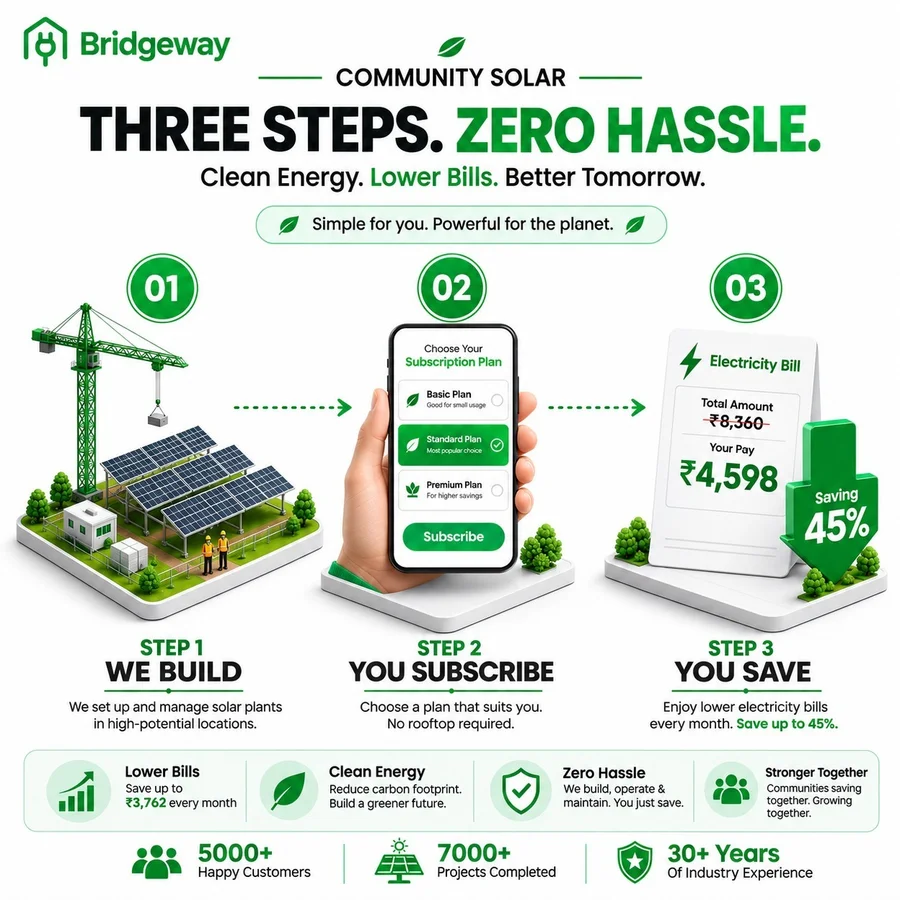
Ask a Delhi flat owner why they have not gone solar, and the answer is almost always the same: “I don’t have a roof.” For the millions of people in apartments, rented homes and housing societies, rooftop solar has long looked like something meant for bungalow owners. Virtual Net Metering (VNM) changes that.
What is Virtual Net Metering?
Virtual Net Metering is an arrangement where solar generation from a plant that is not on your own roof is credited to your electricity connection. You hold a share of a larger plant. Your discom meters its output, and your allotted units are adjusted against your monthly consumption, exactly as a rooftop system would do. The only difference is that the panels sit elsewhere.
Delhi enables this through the DERC net-metering regulations, which recognise both Group Net Metering (GNM) and Virtual Net Metering. The credits flow officially through BSES Rajdhani (BRPL), BSES Yamuna (BYPL) or TPDDL. It is not a private side arrangement.
Rooftop vs Group Net Metering vs VNM
The three terms sound alike but solve different problems.
Rooftop net metering puts panels on your own roof and credits flow through your own meter. It suits owners with a good roof.
Group Net Metering puts panels on one property you own and spreads the credits across your connections. It suits one owner with multiple connections.
Virtual Net Metering puts panels on a shared plant elsewhere. You need no roof, and credits appear on your own bill from your share of the plant. It suits flats, tenants, shaded roofs and housing societies.
If you have no usable roof of your own, VNM is the only one of the three that works.
How VNM works in four steps
Take a share. You take a share of a shared solar plant, sized to your actual yearly usage. Nothing is installed at your home. Registration. The plant is registered with your discom (BRPL, BYPL or TPDDL) under the DERC net-metering framework. Credits on your bill. Your share’s units are credited to your electricity bill each month. They replace units you would otherwise buy at full tariff. Operation. Lease, generation, maintenance and insurance stay with the plant operator for the life of the contract.What it means for housing societies, RWAs and CGHS
Housing societies have two practical routes.
The first is a common-area rooftop plant. It first reduces the common meter that runs lifts, water pumps and corridor lighting. These loads are often the largest recurring cost in a society’s monthly budget.
The second is VNM or GNM where the credits need to reach individual flats. Generation is mapped through the society’s DISCOM to the enrolled flats’ connections.
Subsidy is a real advantage here. An eligible Delhi housing society, RWA or CGHS can receive ₹29,000 per kW for a DCR common-area rooftop solar plant. That is made up of ₹18,000 per kW under the central group-housing support plus ₹11,000 per kW from Delhi. Society plants receive no GBI, and individual flat subsidies are separate.
Who benefits most
Apartment residents with no roof access Tenants and renters, since no landlord permission or roof rights are needed Housing societies, RWAs and CGHS committees Hospitals that need reliable clean energy for critical operations Commercial spaces and retail shops looking to lower overheads with zero capex solarCommon questions
Is VNM legal in Delhi? Yes. It runs through the DERC net-metering regulations. The plant is metered and the credits are applied by your own DISCOM , so the arrangement sits inside the official framework.
Can tenants use it? Yes. Nothing is fixed to the property you live in, so you need no roof rights or structural survey. Credits appear on your own bill for as long as the connection is in your name.
What happens if I move? Your allocation is virtual, so it can typically be reassigned to your new connection or transferred, depending on the plan and the DISCOM. Tell your provider before you shift so the reallocation does not interrupt your credits.
How do I start? Share your latest electricity bill. The provider reads your monthly consumption and tariff slab, sizes your share against it, and tells you the units credited each month. No site visit or roof survey is needed to get that number.
Real projects in Delhi
Bridgeway Power commissioned Delhi’s first VNM solar plant under BRPL in 2024. Its shared solar capacity currently stands at 2.5 MW, across plants that serve Delhi NCR:
Solar Farm I (2.5 MW) is fully allocated and powers 12+ subscribers. Solar Farm II (5 MW) is about 30% subscribed. Solar Farm III (2.5 MW) is about 20% subscribed.Subscribers can expect roughly 15% savings on their electricity bill, with credits appearing on the DISCOM bill. Contracts are rolling, with no lock-in.
Why the provider matters
VNM works only if the plant, the registration and the metering are done correctly. Bridgeway Power is the solar arm of the Sunson group, with electrical contracting since 1990, solar since 2019, and a 45 MW+ group project legacy across Delhi NCR. It handles DISCOM paperwork (registration, metering and net-metering filing) and is rated 4.7★ on Google by Delhi NCR customers.
Conclusion
Not having a roof no longer means not having solar. Whether you are a flat owner, a tenant or part of an RWA or CGHS committee, VNM and GNM offer a route to lower electricity bills through the official DERC framework.
To check availability in your area, visit <a href="https://bridgewaypower.in/community-solar">Community Solar</a> or WhatsApp +91 92890 27500 with your latest electricity bill for a free savings estimate.